Growth Pattern and Physiological Response of Japanese Quails
7 pages · Original document, with a text alternative under each page.
Read page 1 as text
Volume Issue 1
DF-504
[1-7]
RESEARCH ARTICLE Agricultural Science Digest
Growth Pattern and Physiological Response of Japanese Quails
to Administered Aqueous Solution of Egg Lime Molasses
Mixture
A.O. Akintunde 1, L.C. Ndubuisi-Ogbonna 1, O.A. Olorunfemi 1,
M.M. Ladele1, O.A. Ojo 2, A. Adewumi3, O.E. Akinboye1, 10.18805/ag.DF-504
ABSTRACT
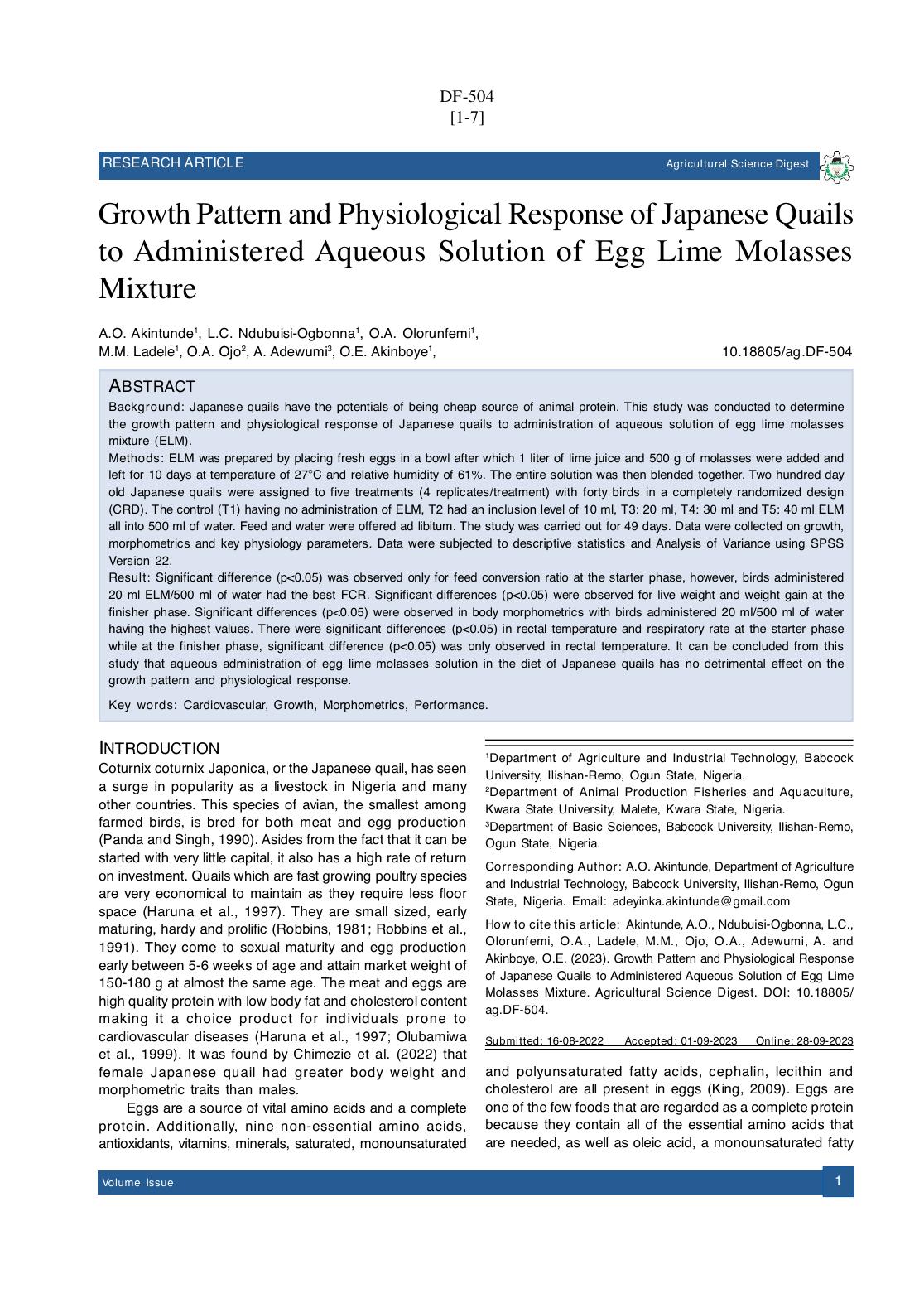
Background: Japanese quails have the potentials of being cheap source of animal protein. This study was conduct ed to determine
the growth pattern and physiological response of Japanese quails to administration of aqueous soluti on of egg lime molasses
mixture (ELM).
Methods: ELM was prepared by placing fresh eggs in a bowl after which 1 liter of lime juice and 500 g of mol asses were added and
left for 10 days at temperature of 27 C and relative humidity of 61%. The entire solution was then blended together. Two hundred day
old Japanese quails were assigned to five treatments (4 replicates/treatment) with forty birds in a completely randomized design
(CRD). The control (T1) having no administration of ELM, T2 had an inclusion level of 10 ml, T3: 20 ml, T4: 30 ml and T5: 40 ml ELM
all into 500 ml of water. Feed and water were offered ad libitum. The study was carried out for 49 days. Data were collected on growth,
morphometrics and key physiology parameters. Data were subjected to descriptive statistics and Analy sis of Variance using SPSS
Version 22.
Result: Significant difference (p<0.05) was observed only for feed conversion ratio at the starter phase, ho wever, birds administered
20 ml ELM/500 ml of water had the best FCR. Significant differences (p<0.05) were observed for live weight and weight gain at the
finisher phase. Significant differences (p<0.05) were observed in body morphometrics with birds admi nistered 20 ml/500 ml of water
having the highest values. There were significant differences (p<0.05) in rectal temperature and res piratory rate at the starter phase
while at the finisher phase, significant difference (p<0.05) was only observed in rectal temperature . It can be concluded from this
study that aqueous administration of egg lime molasses solution in the diet of Japanese quails has n o detrimental effect on the
growth pattern and physiological response.
Key words: Cardiovascular, Growth, Morphometrics, Performance.
1Department of Agriculture and Industrial Technology, Babcock
University, Ilishan-Remo, Ogun State, Nigeria.
2Department of Animal Production Fisheries and Aquaculture,
Kwara State University, Malete, Kwara State, Nigeria.
3Department of Basic Sciences, Babcock University, Ilishan-Remo,
Ogun State, Nigeria.
Corresponding Author: A.O. Akintunde, Department of Agriculture
and Industrial Technology, Babcock University, Ilishan-Remo, Ogun
State, Nigeria. Email: adeyinka.akintunde@gmail.com
How to cite this article: Akintunde, A.O., Ndubuisi-Ogbonna, L.C.,
Olorunfemi, O.A., Ladele, M.M., Ojo, O.A., Adewumi, A. and
Akinboye, O.E. (2023). Growth Pattern and Physiological Response
of Japanese Quails to Administered Aqueous Solution of Egg Lime
Molasses Mixture. Agricultural Science Digest. DOI: 10.18805/
ag.DF-504.
Submitted: 16-08-2022 Accepted: 01-09-2023 Online: 28-09-2023
INTRODUCTION
Coturnix coturnix Japonica , or the Japanese quail, has seen
a surge in popularity as a livestock in Nigeria and many
other countries. This species of avian, the smallest among
farmed birds, is bred for both meat and egg production
(Panda and Singh, 1990). Asides from the fact that it can be
started with very little capital, it also has a high rate of return
on investment. Quails which are fast growing poultry species
are very economical to maintain as they require less floor
space (Haruna et al. , 1997). They are small sized, early
maturing, hardy and prolific (Robbins, 1981; Robbins et al.,
1991). They come to sexual maturity and egg production
early between 5-6 weeks of age and attain market weight of
150-180 g at almost the same age. The meat and eggs are
high quality protein with low body fat and cholesterol content
making it a choice product for individuals prone to
cardiovascular diseases (Haruna et al. , 1997; Olubamiwa
et al. , 1999). It was found by Chimezie et al. (2022) that
female Japanese quail had greater body weight and
morphometric traits than males.
Eggs are a source of vital amino acids and a complete
protein. Additionally, nine non-essential amino acids,
antioxidants, vitamins, minerals, saturated, monounsaturated
and polyunsaturated fatty acids, cephalin, lecithin and
cholesterol are all present in eggs (King, 2009). Eggs are
one of the few foods that are regarded as a complete protein
because they contain all of the essential amino acids that
are needed, as well as oleic acid, a monounsaturated fatty
Read page 2 as text
AGRICULTURAL SCIENCE DIGEST - A Research Journal of Agriculture, Animal and Veterinary Sciences2
Growth Pattern and Physiological Response of Japanese Quails to Administered Aqueous Solution of Egg Lime Molasses Mixture
acid and important sources of essential unsaturated fatty
acids (Linoleic) (Vinayananda et al. , 2019).
Lime juice is a good source of organic acids such as
citric and ascorbic acids (Holden et al. , 2005) and could
serve this purpose. There was a claim that lime juice included
additional biomolecules, including flavonoids and
carotenoids (Holden et al. , 2005). Due to the presence of
organic acids, this could be an additional benefit to lime
juice’s anticipated bioactive properties.
A study conducted by Çetingül et al. (2019) found that
pomegranate molasses, due to its palatability, can be a
beneficial binder and energy source for livestock feed.
However, there is limited research regarding the use of
molasses for quail production.
In a study on nutritional and ethno-medicinal potentials
of egg-lime molasses mixture (ELM) in livestock production
by Akintunde et al. (2022), quantitative evaluation of the
phytochemicals showed that ELM contained alkaloids (8.46
mg/100 g), flavonoids (2.30 mg/100 g), glycosides (0.08 mg/
100 g), Saponin (5.25 mg/100 g), steroids (0.22 mg/l00 g),
phenols (0.09 mg/100 g), terpenoides (0.56 mg/100 g),
tannin (8.34 mg/100 g) and antraquinones (1.60 mg/100 g)
and the vitamin constituents are Vitamin A (3.20 mg/100 g),
Vitamin B1 (280 mg/100 g), Vitamin B2 (880 mg/100 g),
Vitamin B3 (340 mg/100 g), Vitamin C (15.40 mg/100 g)
and Vitamin E (0.015 mg/100 g) (Akintunde et al ., 2022).
However, Akintunde et al. (2022) cam e to the conclusion
that ELM could be a viable natural antibiotic alternative,
particularly in monogastric animal production, because of
its abundance in numerous nutrients and phytochemicals
that give it the capacity to perform many biological activities.
This study is necessitated by the fact that there is dearth
of inf ormation in relation to administration of aqueous
solution of egg lime molasses mixture in drinking water in
addition to regular diet especially as it relates to poultry
production and especially quail production. Therefore, the
objective of this work was to determine the growth pattern
and physiological response of Japanese quails to
administration of aqueous solution of egg lime molasses
mixture in drinking water.
MATERIALS AND METHODS
Experimental site
The investigation was carried out in Ogun State, Nigeria at
the farm house of Babcock University, in Ilishan Remo.
Ilishan Remo, which has a mean temperature of 27 C and
is located in Nigeria’s rain forest region with about 1500
mm of rain annually.
Preparation of egg lime molasses solution
The fresh eggs were placed in a bowl after which 1 liter of
lime juice and 500 g of molasses were added into the same
bowl, then it was covered tightly and left for 10 days at
temperature of 27 C and relative humidity of 61%. At the
end of 10 days, the egg shells had dissolved into solution.
The entire solution was then blended together.
Experimental treatments
Five dietary treatments were formulated. T 1 which was the
control had no administration of egg lime molasses solution,
T2, T3, T4, T5 had 10 ml, 20 ml, 30 ml and 40 ml per 500 ml of
water respectively.
Management of experimental birds and design
A total of 200 day old Japanese quails were purchased
from a local farmer in Lagos State, Nigeria. The quail cages
were cleaned, disinfected and given two weeks to air dry
before the quails arrived. Throughout the duration of the
trial, the birds were given unlimited access to food and water.
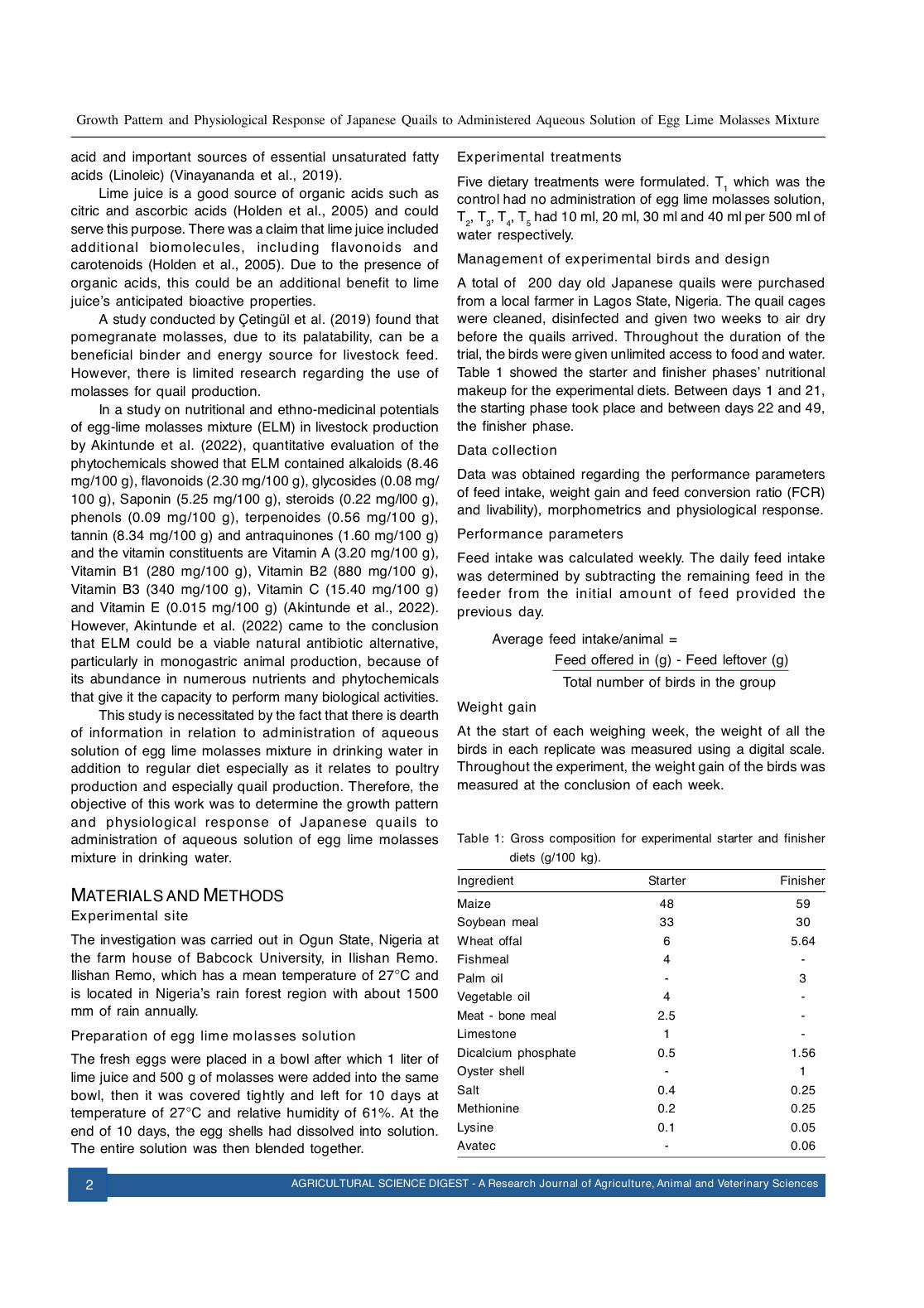
Table 1 showed the starter and finisher phases’ nutritional
makeup for the experimental diets. Between days 1 and 21,
the starting phase took place and between days 22 and 49,
the finisher phase.
Data collection
Data was obtained regarding the performance parameters
of feed intake, weight gain and feed conversion ratio (FCR)
and livability), morphometrics and physiological response.
Performance parameters
Feed intake was calculated weekly. The daily feed intake
was determined by subtracting the remaining feed in the
feeder from the initial amount of feed provided the
previous day.
Weight gain
At the start of each weighing week, the weight of all the
birds in each replicate was measured using a digital scale.
Throughout the experiment, the weight gain of the birds was
measured at the conclusion of each week.
Average feed intake/animal =
Feed offered in (g) - Feed leftover (g)
Total number of birds in the group
Table 1: Gross composition for experimental starter and finis her
diets (g/100 kg).
Ingredient Starter Finisher
Maize 48 59
Soybean meal 33 30
Wheat offal 6 5.64
Fishmeal 4 -
Palm oil - 3
Vegetable oil 4 -
Meat - bone meal 2.5 -
Limestone 1 -
Dicalcium phosphate 0.5 1.56
Oyster shell - 1
Salt 0.4 0.25
Methionine 0.2 0.25
Lysine 0.1 0.05
Avatec - 0.06
Read page 3 as text
Volume Issue 3
Growth Pattern and Physiological Response of Japanese Quails to Administered Aqueous Solution of Egg Lime Molasses Mixture
Feed conversion ratio
This was determined by dividing the total amount of feed
consumed by the overall amount of weight gained.
Morphometrics/Linear body measurements
The measurements of shank length (SL), thigh length (TL),
body girth (BG), wing length (WL) and body length (BL) were
established following the method outlined by Egena et al.
(2014), Ikpeme et al. (2016) and Akintunde et al. (2019).
Physiological response
Respiratory rate
This is calculated by the counting of panting breaths of the
birds for 30 seconds and the value (X) is then multiplied by 2.
Oxygen concentration
Pulse oximeter was used to measure how much oxygen the
hemoglobin in the blood is carrying. This is called the oxygen
saturation and is expressed in percentage.
Body mass index
The Body Mass Index (BMI) was calculated by taking the
bodyweight (in grams) and dividing it by the square of the
body length (in centimeters), with the result expressed in g/
cm2, as Akintunde et al. (2021a) described.
RESULTS AND DISCUSSION
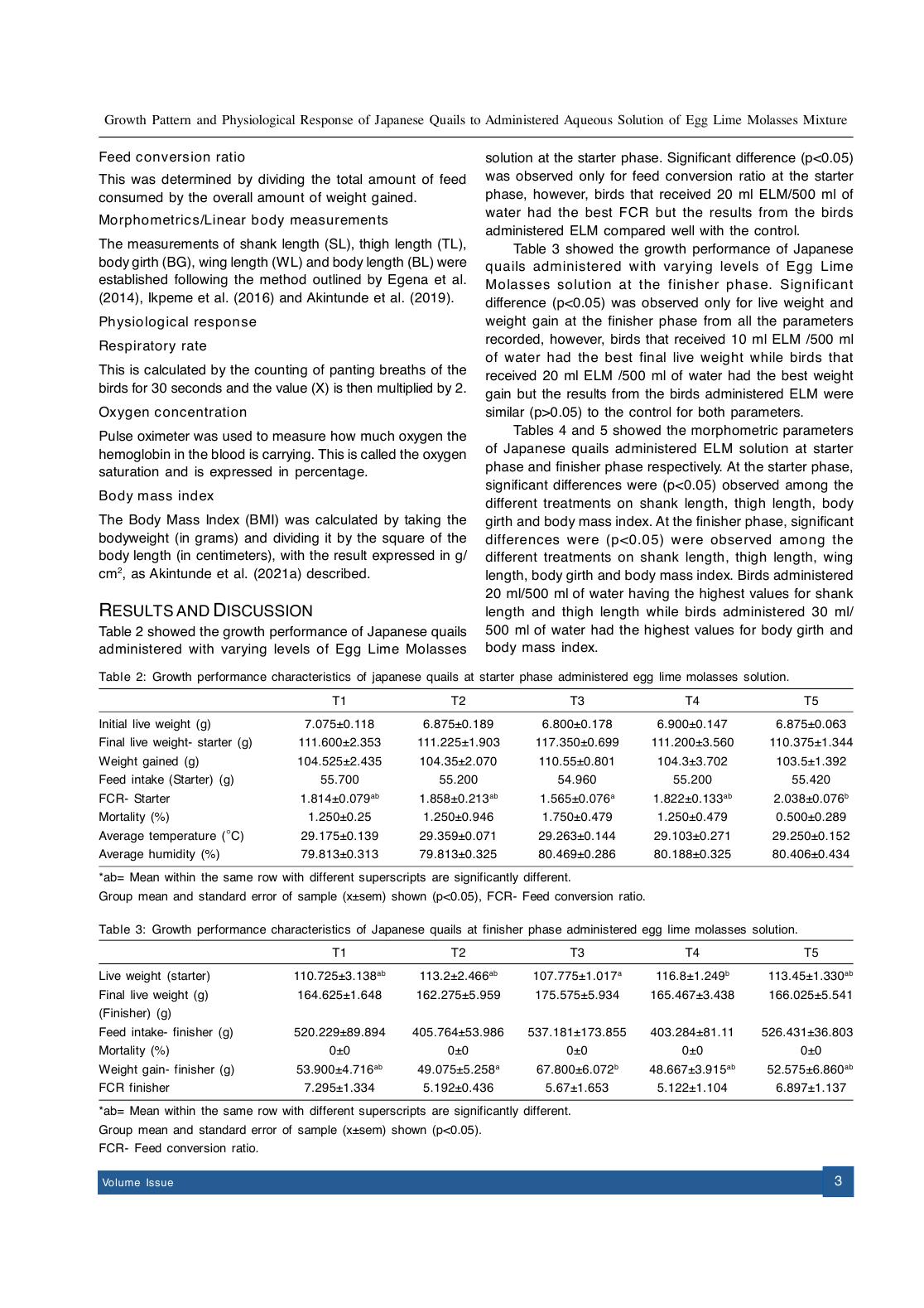
Table 2 showed the growth performance of Japanese quails
administered with varying levels of Egg Lime Molasses
solution at the starter phase. Significant difference (p<0.05)
was observed only for feed conversion ratio at the starter
phase, however, birds that received 20 ml ELM/500 ml of
water had the best FCR but the results from the birds
administered ELM compared well with the control.
Table 3 showed the growth performance of Japanese
quails administered with varying levels of Egg Lime
Molasses solution at the finisher phase. Significant
difference (p<0.05) was observed only for live weight and
weight gain at the finisher phase from all the parameters
recorded, however, birds that received 10 ml ELM /500 ml
of water had the best final live weight while birds that
received 20 ml ELM /500 ml of water had the best weight
gain but the results from the birds administered ELM were
similar (p>0.05) to the control for both parameters.
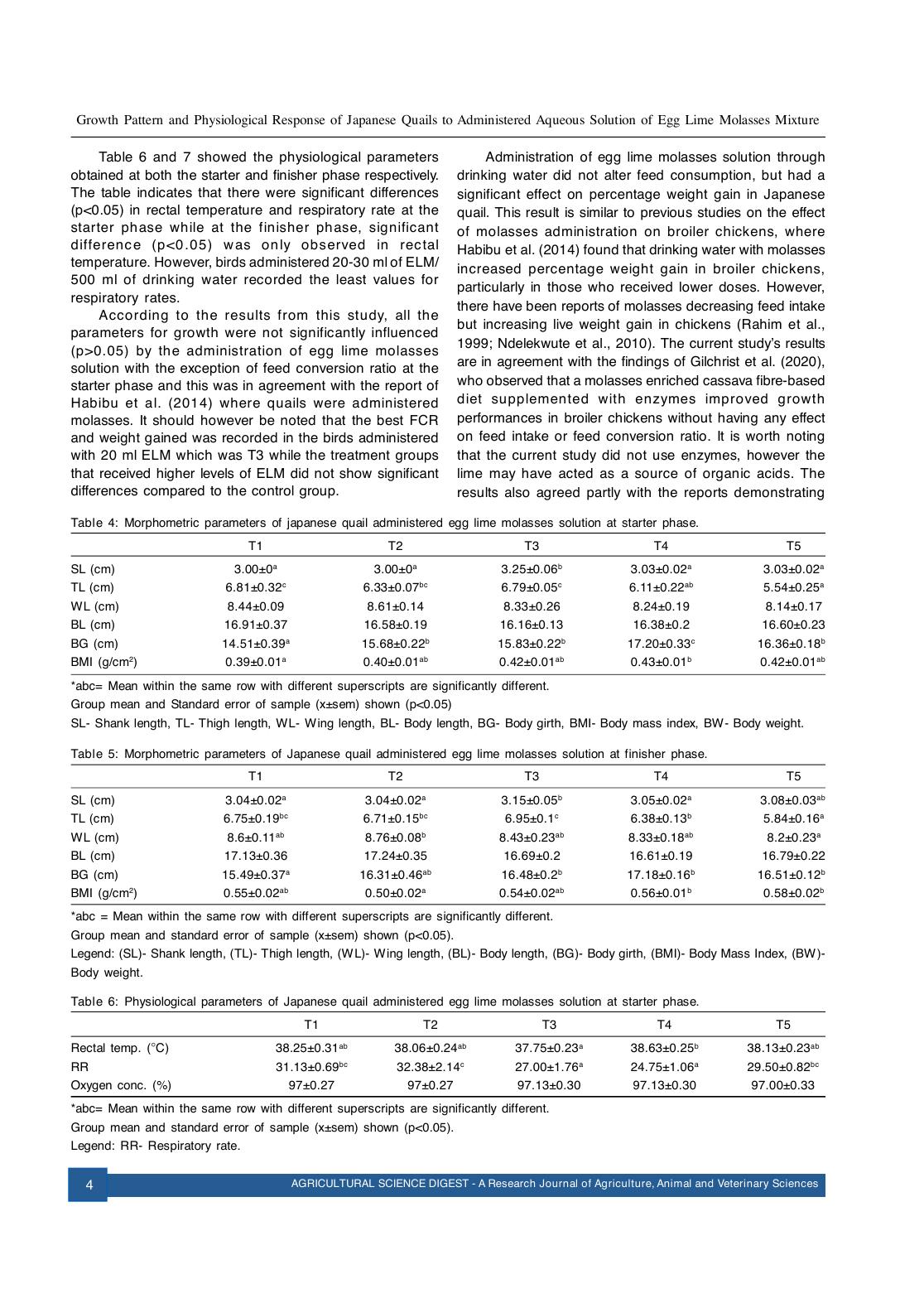
Tables 4 and 5 showed the morphometric parameters
of Japanese quails administered ELM solution at starter
phase and finisher phase respectively. At the starter phase,
significant differences were (p<0.05) observed among the
different treatments on shank length, thigh length, body
girth and body mass index. At the finisher phase, significant
differences were (p<0.05) were observed among the
different treatments on shank length, thigh length, wing
length, body girth and body mass index. Birds administered
20 ml/500 ml of water havi ng the highest values for shank
length and thigh length while birds administered 30 ml/
500 ml of water had the highest values for body girth and
body mass index.
Table 2: Growth performance characteristics of japanese quails at starter phase administered egg lime molasse s solution.
T1 T2 T3 T4 T5
Initial live weight (g) 7.075±0.118 6.875±0.189 6.800±0.178 6.900±0.147 6.875±0.063
Final live weight- starter (g) 111.600±2.353 111.225±1.903 117.350±0.699 111.200±3.560 110.375±1.344
Weight gained (g) 104.525±2.435 104.35±2.070 110.55±0.801 104.3±3.702 103.5±1.392
Feed intake (Starter) (g) 55.700 55.200 54.960 55.200 55.420
FCR- Starter 1.814±0.079 ab 1.858±0.213 ab 1.565±0.076 a 1.822±0.133 ab 2.038±0.076 b
Mortality (%) 1.250±0.25 1.250±0.946 1.750±0.479 1.250±0.479 0.500±0.289
Average temperature ( C) 29.175±0.139 29.359±0.071 29.263±0.144 29.103±0.271 29.250±0.152
Average humidity (%) 79.813±0.313 79.813±0.325 80.469±0.286 80.188±0.325 80.406±0.434
*ab= Mean within the same row with different superscripts are significantly different.
Group mean and standard error of sample (x±sem) shown (p<0.05), FCR- Feed conversion ratio.
Table 3: Growth performance characteristics of Japanese quails at finisher phase administered egg lime molass es solution.
T1 T2 T3 T4 T5
Live weight (starter) 110.725±3.138 ab 113.2±2.466 ab 107.775±1.017 a 116.8±1.249 b 113.45±1.330 ab
Final live weight (g) 164.625±1.648 162.275±5.959 175.575±5.934 165.467±3.438 166.025±5.541
(Finisher) (g)
Feed intake- finisher (g) 520.229±89.894 405.764±53.986 537.181±173.855 403.284±81.11 526.431±36.803
Mortality (%) 0±0 0±0 0±0 0±0 0±0
Weight gain- finisher (g) 53.900±4.716 ab 49.075±5.258 a 67.800±6.072 b 48.667±3.915 ab 52.575±6.860 ab
FCR finisher 7.295±1.334 5.192±0.436 5.67±1.653 5.122±1.104 6.897±1.137
*ab= Mean within the same row with different superscripts are significantly different.
Group mean and standard error of sample (x±sem) shown (p<0.05).
FCR- Feed conversion ratio.
Read page 4 as text
AGRICULTURAL SCIENCE DIGEST - A Research Journal of Agriculture, Animal and Veterinary Sciences4
Growth Pattern and Physiological Response of Japanese Quails to Administered Aqueous Solution of Egg Lime Molasses Mixture
Table 6 and 7 showed the physiological parameters
obtained at both the starter and finisher phase respectively.
The table indicates that there were significant differences
(p<0.05) in r ectal temperature and respiratory rate at the
starter phase while at the finisher phase, significant
difference (p<0.05) was only observed in rectal
temperature. However, birds administered 20-30 ml of ELM/
500 ml of drinking water recorded the least values for
respiratory rates.
According to the results from this study, all the
parameters for growth were not significantly influenced
(p>0.05) by the administration of egg lime molasses
solution with the exception of feed conversion ratio at the
starter phase and this was in agreement with the report of
Habibu et al. (2014) where quails were administered
molasses. It should however be noted that the best FCR
and weight gained was recorded in the birds administered
with 20 ml ELM which was T3 while the treatment groups
that received higher levels of ELM did not show significant
differences compared to the control group.
Administration of egg lime molasses solution through
drinking water did not alter feed consumption, but had a
significant effect on percentage weight gain in Japanese
quail. This result is similar to previous studies on the effect
of molasses administration on broiler chickens, where
Habibu et al. (2014) found that drinking water with molasses
increased percentage weight gain in broiler chickens,
particularly in those who received lower doses. However,
there have been reports of molasses decreasing feed intake
but increasing live weight gain in chickens (Rahim et al .,
1999; Ndelekwute et al., 2010). The current study’s results
are in agreement with the findings of Gilchrist et al. (2020),
who observed that a molasses enriched cassava fibre-based
diet supplemented with enzymes improved growth
performances in broiler chickens without having any effect
on feed intake or feed conversion ratio. It is worth noting
that the current study did not use enzymes, however the
lime may have acted as a source of organic acids. The
results also agreed partly with the reports demonstrating
Table 6: Physiological parameters of Japanese quail administered egg lime molasses solution at starter phase.
T1 T2 T3 T4 T5
Rectal temp. ( C) 38.25±0.31 ab 38.06±0.24 ab 37.75±0.23 a 38.63±0.25 b 38.13±0.23 ab
RR 31.13±0.69 bc 32.38±2.14 c 27.00±1.76 a 24.75±1.06 a 29.50±0.82 bc
Oxygen conc. (%) 97±0.27 97±0.27 97.13±0.30 97.13±0.30 97.00±0.33
*abc= Mean within the same row with different superscripts are significantly different.
Group mean and standard error of sample (x±sem) shown (p<0.05).
Legend: RR- Respiratory rate.
Table 5: Morphometric parameters of Japanese quail administered egg lime molasses solution at finisher phase.
T1 T2 T3 T4 T5
SL (cm) 3.04±0.02 a 3.04±0.02 a 3.15±0.05 b 3.05±0.02 a 3.08±0.03 ab
TL (cm) 6.75±0.19 bc 6.71±0.15 bc 6.95±0.1 c 6.38±0.13 b 5.84±0.16 a
WL (cm) 8.6±0.11ab 8.76±0.08 b 8.43±0.23 ab 8.33±0.18 ab 8.2±0.23 a
BL (cm) 17.13±0.36 17.24±0.35 16.69±0.2 16.61±0.19 16.79±0.22
BG (cm) 15.49±0.37 a 16.31±0.46 ab 16.48±0.2 b 17.18±0.16 b 16.51±0.12 b
BMI (g/cm 2) 0.55±0.02 ab 0.50±0.02 a 0.54±0.02 ab 0.56±0.01 b 0.58±0.02 b
*abc = Mean within the same row with different superscripts are significantly different.
Group mean and standard error of sample (x±sem) shown (p<0.05).
Legend: (SL)- Shank length, (TL)- Thigh length, (WL)- Wing length, (BL)- Body length, (BG)- Body gir th, (BMI)- Body Mass Index, (BW)-
Body weight.
Table 4: Morphometric parameters of japanese quail administered egg lime molasses solution at starter phase.
T1 T2 T3 T4 T5
SL (cm) 3.00±0 a 3.00±0 a 3.25±0.06 b 3.03±0.02 a 3.03±0.02 a
TL (cm) 6.81±0.32 c 6.33±0.07 bc 6.79±0.05 c 6.11±0.22ab 5.54±0.25 a
WL (cm) 8.44±0.09 8.61±0.14 8.33±0.26 8.24±0.19 8.14±0.17
BL (cm) 16.91±0.37 16.58±0.19 16.16±0.13 16.38±0.2 16.60±0.23
BG (cm) 14.51±0.39 a 15.68±0.22 b 15.83±0.22 b 17.20±0.33 c 16.36±0.18 b
BMI (g/cm 2) 0.39±0.01 a 0.40±0.01 ab 0.42±0.01 ab 0.43±0.01 b 0.42±0.01 ab
*abc= Mean within the same row with different superscripts are significantly different.
Group mean and Standard error of sample (x±sem) shown (p<0.05)
SL- Shank length, TL- Thigh length, WL- Wing length, BL- Body length, BG- Body girth, BMI- Body mass index, BW- Body weight.
Read page 5 as text
Volume Issue 5
Growth Pattern and Physiological Response of Japanese Quails to Administered Aqueous Solution of Egg Lime Molasses Mixture
that the consideration of molasses in broiler diets had no
critical impact on feed effectiveness (Khalid et al. , 2007).
The inclusion of ELM significantly influenced the feed
conversion ratio of Japanese quails at the starter phase in
the present study and this was in agreement with the reports
of Rahman et al. (2019) that feed efficiency improved
(p<0.05) at 2 nd, 3rd and 4 th weeks as the fundamental impact
of molasses supplementation in broiler production.
Body weight and body measurements are significant
considerations for both poultry breeders and meat
processors (Adeniji and Ayorinde, 1990; Akintunde et al. ,
2019; Akintunde et al. , 2021a). These factors are used to
calculate a variety of economic characteristics of farm animals.
Furthermore, they are indispensable factors when it comes
to assessing growth, feed efficiency and making economic
and marketing decisions (Momoh and Kershima, 2008).
The results of the current study showed that there were
significant (p<0.05) differences for some parameters
measured (shank length (SL), thigh length (TL), body girth
(BG)). There was, however, no significant difference (p>0.05)
in wing length (WL), body length (BL) and body mass index
(BMI). The body weight and linear measurements obtained
in this study were lower compared to the values reported by
other authors, such as Reddish et al. (2003) and Ojo et al.
(2014), which ranged from 35.23 g to 143.78 g. Alabi et al.
(2012) anticipated a correlation between morphometric traits
and body weight in birds from multiple populations and
environments. Ibe and Nwakalor (1987) observed a strong
positive correlation between linear measurements and body
weight in Nigerian local chickens. Akintunde et al. (2020)
also found a low positive connection between morphometrics
and body weight in Yoruba Ecotype Chickens that were given
graded levels of Moringa oleifera seed meal. Raji et al .
(2009) conducted a zoometric study on Nigerian local duck,
which demonstrated a highly significant positive correlation
between body weight (BW) and linear body measurements.
It was found that body girth had the highest correlation to
body weight, followed by body length. This strong
relationship between body girth and body weight may be
due to the presence of important bones, muscles and viscera
in the body girth. These results are in agreement with the
findings of Akintunde et al. (2020) that diets affect the
association between body weights and morphometric
measurements.
The results obtained signified an improvement in the
performance parameters of quail receiving an inclusion level
of 20ml of ELM into 500 ml of water as seen in T3 which
had a better body weight gain, shank lengths and thigh
lengths while T4 (30 ml of ELM in 500 ml of water) had the
best body girth which is a good pointer to higher body weight.
The body mass index was significantly influenced by
the inclusion of ELM and this was in agreement with the
reports of Akintunde et al. (2021b) who observed that the
inclusion of Moringa oleifera seed meal significantly
influenced BMI in Yoruba Ecotype chickens and Marshall
broiler chickens. Similar observations in the BMIs of broiler
and pullets chickens fed cabbage were also made by
Adesina and Toye (2014). However, the values obtained for
BMIs in the study at starter (0.39-0.43 g/cm 2) and finisher
(0.50-0.58 g/cm 2) were in proximity to the ranges reported
for pullets chickens at week 4 (0.31- 0.36 g/cm 2) and week
7 (0.48-0.56 g/cm 2) reported by Oludoyi and Toye (2012)
and the range of 0.47-0.61 g/cm 2 reported by Akintunde
et al. (2021b) for Yoruba Ecotype Chickens.
It was observed from the present study that there was
significant difference (p<0.05) in rectal temperature and
respiratory rate (RR) having an average of 38.48 C and
97.10% respectively. The results showed that the inclusion
of the ELM did not negatively affect the physiological
response of the birds. The respiratory rate was normal and
also within the range reported for broiler chickens by
Nurmeiliasari et al. (2020). The values obtained for rectal
temperature (37.63-38.81 C) was however lower than the
values of 41.07-41.64 C and 41.00-43.60 C for quails
reported by Alkan et al. (2012) and Khalil et al. (2012)
respectively.
CONCLUSION
It can be concluded from this study that the administration
of aqueous solution of egg lime molasses mixture in drinking
water of Japanese quails did not alter the growth parameters
of Japanese quails however birds that received 20 ml per
500ml of water had the best feed conversion ratio and weight
gain. Also, in terms of their growth patterns, birds
administered 20 ml/500 ml of water had the best thigh and
shank length, hence they have the potentials of growing
taller while birds administered 30 ml of ELM/500 ml of water
had the highest body girth and body mass index which might
be an indication of cardiovascular problem. However, birds
administered 20 ml ELM per 500 ml of drinking water had
the least values for respiratory rates at the starter phase
which is suggestive that the administration of 20 ml of ELM
per 500 ml of drinking water will be most effective for better
Table 7: Physiological parameters of Japanese quail administered egg lime molasses solution- finisher phase.
T1 T2 T3 T4 T5
Rectal temp. ( C) 38.25±0.27 ab 38.06±0.22 ab 38.25±0.21 ab 37.63±0.26 a 38.81±0.25 b
RR 33.00±1.58 32.88±1.78 32.38±1.24 31.00±2.24 35.25±1.6
Oxygen conc. (%) 96.88±0.3 97.38±0.26 97.25±0.25 97.13±0.35 97.25±0.25
*ab= Mean within the same row with different superscripts are significantly different.
Group mean and standard error of sample (x±sem) shown (p<0.05).
Legend: RR- Respiratory rate.
Read page 6 as text
AGRICULTURAL SCIENCE DIGEST - A Research Journal of Agriculture, Animal and Veterinary Sciences6
feed conversion ratio, weight gain and for optimum
cardiovascular physiological responses of Japanese quails.
Coflict of interest: None.
REFERENCES
Adeniji, F.O. and Ayorinde, K.L. (1990). Prediction of body w eight
from body measurements of chicken. Nigerian Jo urnal
of Animal Production.17: 42-47.
Adesina, O.O. and Toye, A.A. (2014). Nutritive effect of cabbag e
(Brassica oleracea ) on growth, obesity, lipidaem ia and
haematology in broiler and pullet chickens. Global Journal
of Agricultural Sciences.13:11-25. DOI: http://dx.doi.org/
10.4314/gjass.v13i1.3.
Akintunde, A.O., Toye, A.A. and Ogundere, A.A. (2019). Geneti c
differences in the body weight and haematological traits
of Local and Exotic chickens fed graded levels of Moringa
oleifera seed meal. Wayamba Journal of Animal Science.
11: 1836-1849.
Akintunde, A.O., Toye, A.A., Ademola, A.A. and Jubril, A.E. (2020).
Correlation between body weight and morphometric traits
in local and exotic chickens to dietary levels of Moringa
oleifera (Lamarck) seed meal. Nigerian Journal of Animal
Production. 47(3): 1-6.
Akintunde, A.O., Toye, A.A. and Ademola, A.A. (2021a). Principal
component analysis of body measurements in two
genotypes of chickens fed graded levels of Moringa
oleifera seed meal. Journal Animal Production Research.
33(1): 1-13.
Akintunde, A.O., Toye, A.A. and Ademola, A.A. (2021b). Effects of
dietary Moringa Oleifera seed meal on obesity, liver and
kidney functional parameters of local and exotic chickens.
Aceh Journal of Animal Science. 6(3): 97-103.
Akintunde, A.O., Ndubuisi-Ogbonna, L.C., Olorunfemi, O.A., Ladele,
M.M., Shobo, B.A., Adewole, S.A. and Akinboye, O. E.
(2022). Nutritional and ethno-medicinal potentials of egg-
lime-molasses mixture in livestock production. Asian
Journal of Dairy and Food Research. doi: 10. 18805/
ajdfr.DRF-285.
Alabi, O.J., Ngambi, J.W., Norris, D. and Egena, S.A. (20 12).
Comparative study of three indigenous chicken bre eds
of South Africa: Body weight and linear body measurements.
Agricultural Journal. 7(3): 220-225. DOI: 10.3923/aj.2012.
220.225.
Alkan, S., Karsli, T., Karabağ, K., Galiç, A. and Balcioğlu, M.S. (2012).
The effects of thermal manipulations during early and
late embryogenesis on body temperatures of J apanese
quails ( Coturnix coturnix japonica ). Journal of Appli ed
Animal Research. 40(1): 13-16. DOI: 10.1080/09712119.
2011.607940.
Brzóska, F., liwiñski, B. and Michalik-Rutkowska, O. (2013). Effect
of dietary acidifier on growth, mortality, post-slaug hter
parameters and meat composition of broiler chickens.
Annals of Animal Science. 13: 85-96.
Çetingül, İ.S., Iqbal, A., Bayram, İ., Gültepe, E.E., Uyarlar, C. and
Özçýnar, Ü. (2019). Effect of pomegranate molasses on
egg quality traits during different storage time in laying
hens. Kocatepe Veterinary Journal. 12(2): 193-199.
Chimezie, V.O., Akintunde, A.O., Ademola, A.A. and Aina, F.A. (2022).
Principal component analys is of bodyweig ht and
morphometric traits in Japanese Quail Coturnix coturnix
japonica. Aceh Journal of Animal Science. 7 (2): 47-52.
DOI: 10.13170/ajas.7.2.24533.
Egena, S.S.A., Ijaiya, A.T., Ogah, D.M. and Aya, V.E. (2014). Principal
component analysis of body measurements in a population
of indigenous Nigerian chickens raised under extensive
management system. Slovak Journal of Animal Science,
47(2): 77-82.
Gilchrist, T.D., Ruben, N.T., Raphaël, K.J., Agwah, E.D., Sévérin,
T., Josiane, K.N.G., Guilaine, N.T., Boris, N.T., K odel,
T.T.R. and Aghanie, A. (2020). Growth performances of
broiler chickens fed on molasses enriched cassava fibre
based-diet supplemented with enzymes. Journal of Animal
and Plant Sciences. 46(1): 8100-8112. https://doi.org/
10.35759/JAnmPlSci.v46-1.4.
Habibu, B., Ikira, N.M., Buhari, H.U., Aluwong, Y ., Kawu, M.U., Yaqub,
L.S., Tauheed, M. and Isa, H.I. (2014). Effect of molasses
supplementation on live weight gain, haematol ogic
parameters and erythrocyte osmotic fragility of broi ler
chickens in the hot-dry season. International Jou rnal of
Veterinary Science. 3: 181-188.
Haruna, E.S., Musa, U., Okewole, P.A., Shemaki, D., Lombin, L.H.,
Molokwu, J.U., Edache, J.A. and Karsin, P.D. (1997).
Protein requirement of quail chicks in Plateau State, Nigeria.
Nigerian Veterinary Journal. 18: 108-113.
Holden, J.M., Bhagwat, S.A., Haytowitz, D.B., Gebhardt, S.E., Dwyer,
J.T., et al. (2005). Development of a database of critically
evaluated flavonoids data: Application of USDA’ s data
quality evaluation system. Journal of Food Composition
Analysis. 18: 829-844.
Ibe, S.N. and Nwakalor, C.N. (1987). Growth pattern performance
in broilers influence of genotype and manageme nt on
isometry of growth. Poultry Science. 66: 1274-1284.
Ikpeme, E.V., Kooffreh, M.E., Udensi, O.U., Ekerette, E.E., Ashishie,
L.A. and Ozoje, M.O. (2016). Multivariate-based genetic
diversity analysis of three genotypes of Nigerian loca l
chickens ( Gallus domestica ). International Journal of
Science and Research Methodology. 5 (2): 1-12.
Khalid, Seham, Khadiga and Omer, M.I. (2007). The response of
broiler chicks to different dietary molasses levels. A L
buhuth. Khartoum. 11: 1.
Khalil, H.A., Gerken, M., Hassanein, A.M. and Mady, M.E. (2012).
Behavioural responses of two Japanese quail lines differing
in body weight to heat stress. Egyptian Journal of Animal
Production. 49 (Suppl. Issue): 151-158.
King, A.J. (2009). Multidisciplinary Uses of the Chicken Egg. Avian
Biology Research. 2(3): 107-119. doi:10.3184/ 1758155
08X402455.
Momoh, O.M. and Kershima, D.E. (2008). Linear body measurements
as predictors of body weight in Nigerian local chi ckens.
Asset series. A8(2): 206-212.
Ndelekwute, E.K., Uzegbu, H.O., Igwe, I.R., Nosike, R.J., Odoemelam,
V.U. and Inyan, U.O. (2010). Effects of administration of
molasses through drinking water on growth and conformation
parameters of meat-type chicken. Animal Product ion
Research Advances. 6: 30-34.
Growth Pattern and Physiological Response of Japanese Quails to Administered Aqueous Solution of Egg Lime Molasses Mixture
Read page 7 as text
Volume Issue 7
Nurmeiliasari, Fenita, Y., Zitriyani, E. and Firdaus, F. (2020 ).
Physiological responses and blood profile of br oiler
chicken supplemented with red dragon fruit peel (Hylocereus
polyrhizus) subjected to transportation stress. Advances
in Biological Sciences Research. 13: 182-189.
Ojo, V., Fayeye, T.R., Ayorinde, K.L. and Olojede H. (2014). Relationship
between body weight and linear body measurement of
Japanese quail. Journal of Scientific Research. 6(1): 175-183.
Olubamiwa, O., Haruna, E.S., Musa, U., Akinwale, T.O., Combin ,
L.H. and Longe, G.O. (1999). Effects of different energy
levels of cocoa based diets on the productive performance
of Japanese quail. Nigerian Journal of Animal Production.
26: 88-92.
Oludoyi, I.A. and Toye, A.A. (2012). The effects of early feeding of
Moringa oleifera leaf meal on performance of broiler and
pullet chicks. Agrosearch. 12(2):160-172. DOI : 10.4314/
agrosh.v12i2.4.
Panda, B. and Singh, R. (1990). Development in processing Quail.
World Poultry Science Journal. 46: 219-234.
Rahman, S., Yasin, M., Hoque, M.A., Akter, N., Islam, S. and Hossain,
M.E. (2019). Effects of supplementing lemon juice and
molasses onthe performance of broiler chickens. Indian
Journal of Poultry Science. 54(3): 205-211.
Rahim, A.G.A., Eiman, A.T.E., El-Bagir, N.M. and Haseeba, S.A.
(1999). Effects of feeding different levels of sugar ca ne
molasses to broiler chicks: feed intake, body weight gain,
efficiency of feed utilization and dressing percentage .
Sudan Journal of Veterinary Science and Animal Husbandry.
38: 93-101.
Raji, A.O., Igwebuike, J.U. and Usman, M.T. (2009). Zoome tric
body measurements and their relation with live weight in
matured local Muscovy ducks in Borno state Nige ria.
ARPN Journal of Agricultural and Biological Science. 4:
52-58.
Reddish, J.M., Nestor, K.E. and Lilburn, M.S. (2003). Effect of
selection for growth on onset of sexual maturity in random
-bred and growth selected lines of Japanese quail. Poultry
Science. 82: 187.
Robbins, G.E.S. (1981). Quail, their breeding and managemen t.
Publisher-World Pheasant Association (WPA). 1(9): 10.
Robbins, M.P., Hartnoll, J. and Morris, P. (1991). Phenylpropanoid
defence responses in transgenic Lotus corniculatus 1.
Glutathione elicitation of isoflavanphytoalexins in transformed
root cultures. Plant Cell Reports. 10(2): 59-62.
Vinayananda, C.O, Sudheer, K. and Rongsensusang. (201 9).
Nutritional Value of Poultry Egg: An Overview. Poultry
Punch Magazine. https://thepoultrypunch.com/2019/09/.
Growth Pattern and Physiological Response of Japanese Quails to Administered Aqueous Solution of Egg Lime Molasses Mixture